Key takeaways
- A master key system lets different keys open different sets of doors.
- It suits buildings with many doors and many people.
- Good design and key control matter more than the number of levels.
- Plan for growth so you can add doors later.
How it works
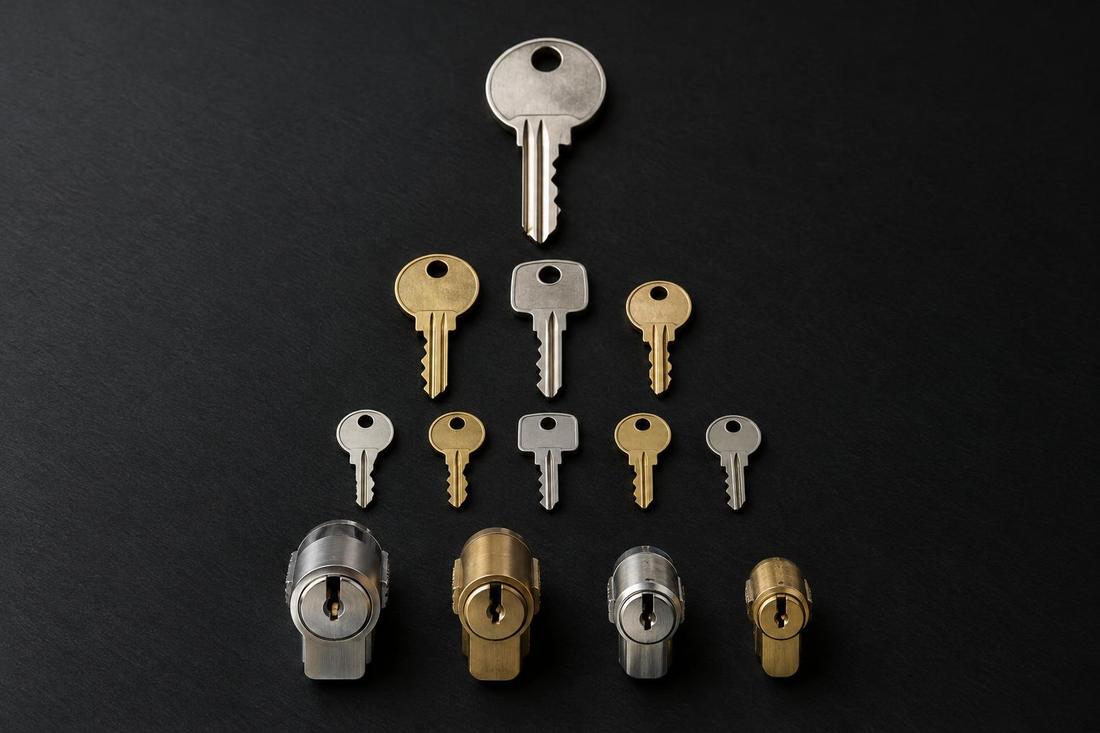
Each lock is built so it can be opened by its own change key and by one or more higher-level keys. A grand master opens everything, a master opens a group and a change key opens a single door.
This is done inside the cylinder with extra pin layers.
Who needs one
Apartment communities, offices, schools, churches and clinics benefit, because managers need broad access while staff and tenants need limited access. A small business with two or three doors usually does not need one.
If you carry a heavy ring of keys, ask about one.
Security and control
More levels mean more complexity, and each master key is a powerful tool. Use restricted key blanks, keep records, limit who holds master keys and rekey if one is lost.
A well-run system can be very secure.
Planning ahead
Plan how many doors you may add and which groups you will need. A designer can leave room in the system so you do not have to start over when you grow.
Ask for a written bitting chart and store it safely.
Official sources and further reading
These are independent organizations. Links open in a new tab.
Quick answers
Can I convert existing locks to a master system?
Often, yes, by rekeying or swapping cylinders.
What if a master key is lost?
Rekey the affected group. A good design limits how much has to be redone.