Key takeaways
- Rekeying changes the inside of the lock so old keys stop working.
- Replacing swaps the whole lock for new hardware.
- Rekey if the locks are in good shape and you like how they look.
- Replace if locks are worn, damaged, outdated or you want better security or features.
What rekeying is
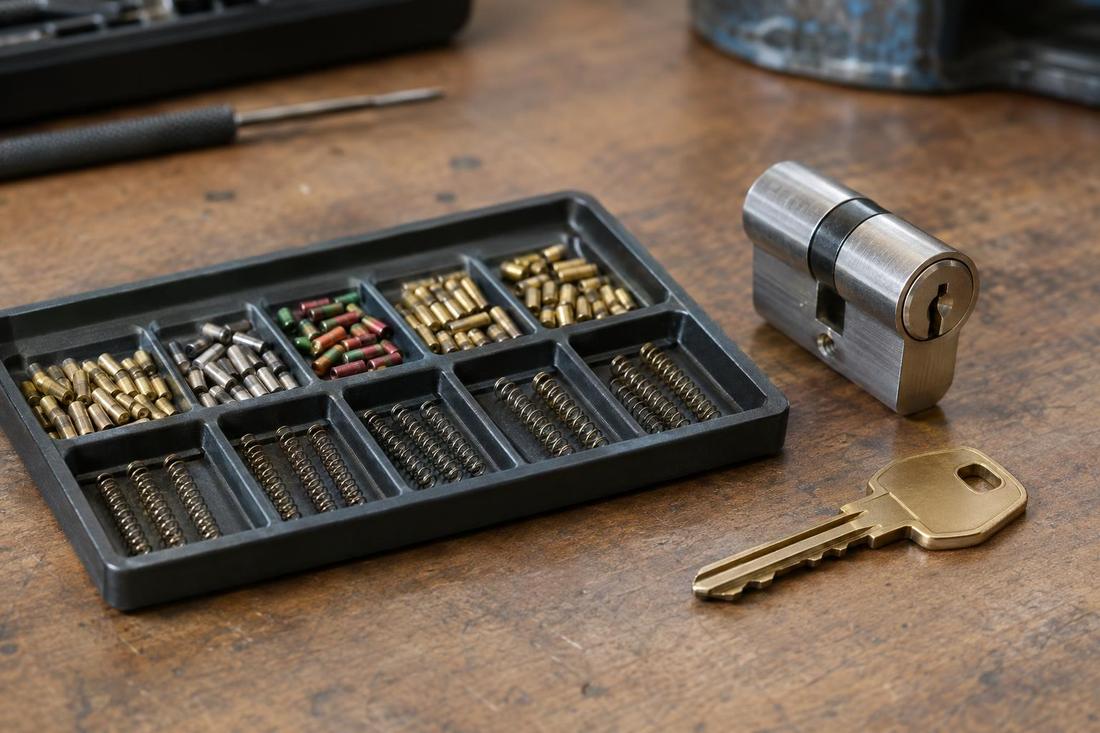
Rekeying removes the lock cylinder, replaces the pins inside to fit a new key and puts it back. The look and feel stay the same. The old keys stop working, and several locks can be set to the same new key.
It is quick, and a good fit after a move or a lost key.
What replacing is
Replacing means removing the old lock and installing a new one. You can change the style, finish and security grade, or add smart features. It is the better choice for worn, damaged or low-quality locks.
New locks come with their own keys.
How to decide
If the locks work smoothly and are decent quality, rekey. If keys stick, handles are loose, the finish is gone or the lock is a basic builder grade, replace. If you want smart locks or deadbolts where there are none, replace.
A locksmith can look at your locks and tell you.
Doing both
Many customers replace the front door lock for style and security and rekey the rest to match. That gives one key for the whole house with a mix of old and new hardware.
Talk through the options before you decide.
Official sources and further reading
These are independent organizations. Links open in a new tab.
Quick answers
Can any lock be rekeyed?
Most pin tumbler locks can. A few low-grade or unusual ones cannot.
Which is quicker?
Rekeying is usually quicker than replacing.